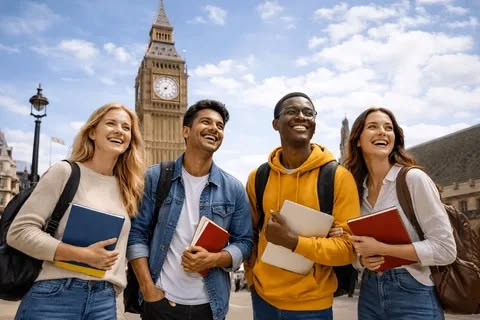
Navigating the New Visa Regulations, Due to new visa requirements, international students’ path to a U.S. college has become much more complicated over the last ten years, The path, which was formerly thought to be simple for individuals with academic merit, now involves an increasing number of procedural, political, and legal obstacles.
Students encounter increased obstacles to entry and uncertainties regarding their academic fate when new visa requirements change, Addressing the wider ramifications for international mobility and higher education requires an understanding of the effects of these changing regulations.
This article examines some of the difficulties that overseas students could encounter and suggests a solution or changes to lessen these difficulties.
Table of contents
- What Difficulties Do International Students Face Due to the New Visa Regulations?
- 1. Visa Uncertainty: A Barrier to Opportunity
- 2. Policy Shifts and Their Ripple Effect
- 3. Institutional Responses to Student Concerns
- 4. Comparing Global Competitors
- 5. Social and Emotional Toll on Students
- The Path Forward: Reforms and Recommendations
- Conclusion
What Difficulties Do International Students Face Due to the New Visa Regulations?
International students’ experiences are changing all across the world due to new visa rules, Although these adjustments are intended to tighten immigration rules and correspond with national objectives, they frequently encounter unforeseen obstacles.
Students now have a more difficult and unclear path to academic and career prospects in the US due to visa uncertainties, policy changes, and their knock-on effects.
1. Visa Uncertainty: A Barrier to Opportunity
Obtaining a student visa for the United States has become much more difficult, the procedure has become increasingly confusing and stressful for candidates due to lengthy wait times for interviews, ambiguous qualifying rules, and changing administrative priorities.
More than 60% of potential international students mentioned visa difficulties as a major consideration when deciding where to study, according to a 2023 survey by IIE Open Doors.
Although the F-1 visa is still the most popular option for academic study, processing timeframes and acceptance rates differ significantly based on the place of origin, students from politically delicate areas or those involved in diplomatic disputes may encounter rejections that seem arbitrary, causing their plans to be delayed or completely derailed.
2. Policy Shifts and Their Ripple Effect
This analysis of how visa policies affect college applications shows how policy changes, even short-term ones, can have a domino effect, For example, hundreds of students missed semesters due to the COVID-19 pandemic’s suspension of regular visa services, which interfered with their academic schedules and made their financial problems worse.
Furthermore, many students are questioning the long-term worth of a U.S. degree due to continuing changes to regulations pertaining to H-1B work visas and Optional Practical Training (OPT), students are moving to other nations with more clear and predictable pathways since they have less opportunities to stay after graduation in order to obtain professional experience.
3. Institutional Responses to Student Concerns
Universities and colleges are reacting in different ways. Some have improved support services for foreign applicants and expedited their own internal admissions processes, others have strengthened their alliances with immigration law firms or made investments in online learning resources that let students start their studies overseas while they wait for their visas to be approved.
Institutions have also stepped up their lobbying efforts in recent years, advocating for changes to the visa regime through national advocacy groups, the objective is to cultivate a more dependable visa pipeline and rebuild the United States’ standing as a friendly destination for international talent.
Establishing a welcoming, inclusive, and productive learning environment requires institutional solutions to student concerns, It is the duty of educational establishments to hear what students have to say, deal with issues, and put solutions in place that support both academic achievement and wellbeing.
Communication channels including surveys, suggestion boxes, student councils, and feedback meetings are crucial ways that universities address student issues, students can voice their concerns on these platforms on academic policies, instructional strategies, campus amenities, mental health services, and other matters that impact their educational experience.
Institutions frequently review policies and processes in response to concerns, to better serve students’ needs, schools could, for instance, adapt schedules, enhance academic support programs, or alter assessment procedures, these modifications show a dedication to student-centered learning and ongoing development.
Support services are also offered by institutions to deal with academic and personal difficulties, financial assistance offices, career counselling services, counselling centers, and tutoring programs assist students in overcoming challenges that could compromise their wellbeing and academic success, these tools make learning more enjoyable and effective.
Another essential component of successful institutional responses is transparency, when leaders involve students in problem-solving processes, give clear explanations of decisions, and provide updates on actions taken, students are more likely to trust their institutions, the relationship between students and the institution is strengthened by open communication, which promotes respect for one another.
Institutions also frequently set up official grievance and complaint mechanisms to guarantee that issues are resolved in a fair and competent manner, these procedures support accountability and safeguard students’ rights.
Overall, effective institutional responses to student concerns increase student satisfaction, boost educational standards, and build a more supportive learning environment, Institutions can better satisfy their students’ needs and foster a culture of trust, involvement, and continual progress by actively listening to and responding to criticism.
4. Comparing Global Competitors
The United States is no longer the undisputed top choice for overseas students, more student-friendly immigration laws have been implemented in countries including Canada, Australia, Germany, and the United Kingdom, for example, Canada is a popular destination for students from Asia and Africa because it provides a clear road to permanent residency and an open post-study work program.
The Migration Policy Institute reports that, in contrast to stagnation and decrease in the United States, the number of international students enrolled in Canada increased by 135% between 2010 and 2022, Additionally, these nations offer applicants and their families more peace of mind due to stable policy regimes that don’t significantly fluctuate with election cycles.
Comparing worldwide competitors is a crucial method for understanding an organization’s position in the international marketplace and identifying growth prospects, global rivals are businesses that operate in numerous countries and compete for consumers, resources, and market share on a global scale, businesses can use competition analysis to make more informed decisions, develop their strategy, and preserve a competitive advantage.
Product or service quality is an important factor to consider while comparing, companies compare their offers to those of international competitors in terms of features, reliability, innovation, and customer satisfaction, understanding these distinctions enables organisations to identify strengths to build on and shortcomings to address.
Another crucial element is pricing tactics, International rivals frequently operate in diverse economic contexts, which may have an impact on their pricing strategies, businesses can assess if they are providing clients with good value while maintaining profitability by comparing prices, Additionally, it enables them to comprehend how rivals draw in and keep clients in different markets.
Brand reputation and market presence are equally important, strong brand awareness and devoted clientele are frequently advantageous to well-known international businesses, successful branding strategies, marketing initiatives, and consumer interaction tactics employed by rivals in many parts of the world can teach businesses valuable lessons.
Innovation and technology are essential to international competition, businesses regularly contrast their R&D initiatives, digital prowess, and technical innovations with those of their top rivals, businesses that successfully innovate are frequently in a better position to adjust to shifting consumer demands and new market trends.
Operational efficiency is another crucial factor, companies examine how rivals handle human resources, distribution networks, production procedures, and supply chains, Costs may be cut, output can be increased, and overall performance can be improved with efficient operations.
Analysing global competitors also entails looking at company social responsibility, sustainability, and customer service strategies, businesses that exhibit moral conduct and environmental responsibility are becoming more and more valued by customers, organisations can improve their own procedures and public perception by learning how rivals handle similar problems.
Comparing international rivals, however, involves more than just imitating prosperous companies, every organization functions within distinct regulatory, cultural, and economic contexts, Finding best practices and modifying them to fit the unique objectives and conditions of the business are key components of effective comparison.
Stress associated to visas doesn’t stop after a document is issued, students have to deal with the ongoing concern of policy changes, heightened monitoring at ports of entry, and the possibility of sudden deportation in situations involving status infractions, Academic performance and mental health may suffer as a result of these worries.
Students frequently have to deal with financial difficulties and familial obligations, particularly if their studies are disrupted, maintaining legal status requires emotional labour that is frequently undervalued, including regular credit hours, job restrictions, and stringent deadlines.
The Path Forward: Reforms and Recommendations
In order to better assist overseas students, the United States needs to think about changing its policies to make them more predictable and trustworthy, This comprises:
- Streamlining visa interview processes and reducing wait times
- Offering clearer post-graduation work options
- Ensuring transparency in approval and rejection metrics
- Decoupling student mobility from fluctuating political climates
Higher education institutions also have a role to play, proactive communication, readily available legal support, and comprehensive onboarding processes can reduce students’ anxiety, several colleges have even begun to offer deferral flexibility or overseas satellite campus options to keep students engaged while they undergo the immigration process.
Conclusion
International students face several difficulties as a result of the new visa rules, the stakes are stronger than ever as the United States tries to keep its position as the world’s leader in higher education, the obstacles go far beyond paperwork, from emotional tolls to legal obstacles.
The future of international cooperation, the vibrancy of campuses, and the diversity of classrooms are all impacted by the influence of visa laws on college admissions, which is no longer a remote worry.
In order to stay competitive, the United States needs to reconsider how it handles student mobility and implement rules that align with its ideals and goals of becoming a global leader in academia.
Leave a Reply